

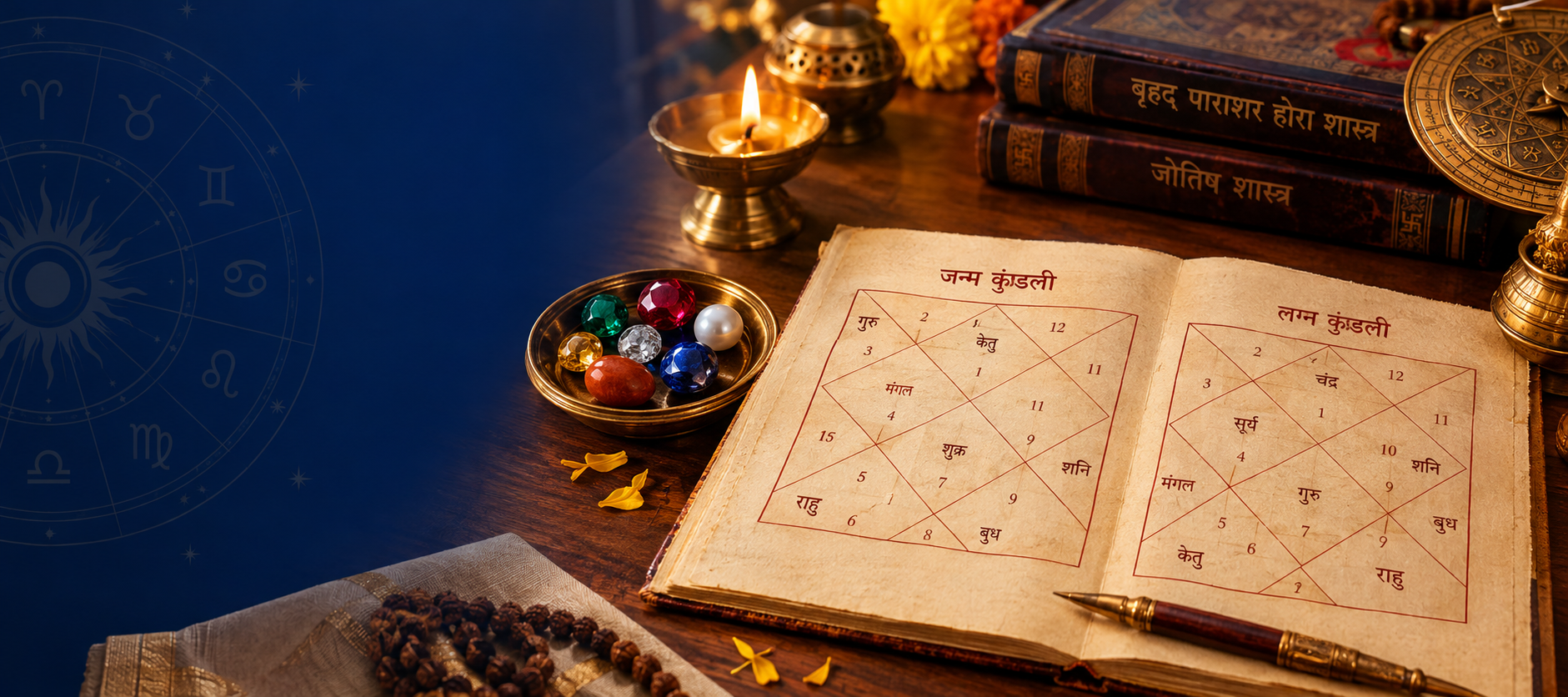
How to Read the 12 Houses in Your Kundli
How to Read the 12 Houses in Your Kundli
Have you ever opened your Janam Kundli and wondered what the numbers, zodiac signs, planets, and boxes mean? Understanding the 12 houses in Kundli is the first step towards learning how Vedic astrology interprets different areas of life, including personality, family, wealth, education, marriage, career, and spirituality.
In traditional Indian astrology, a Kundli is more than a chart filled with symbols. It is a framework astrologers use to study planetary positions at the time of birth and interpret their traditional associations with different aspects of life.
Whether you are curious about your career, relationships, financial goals, or personal growth, learning the basics of Kundli houses can help you understand your birth chart more clearly.
This beginner-friendly guide explains all 12 houses in astrology, their meanings, and how to read them together.
What Are the 12 Houses in Kundli?
The 12 houses in a Kundli represent different areas of life in Vedic astrology. Each house has its own traditional significance, and the sign and planets associated with it add further meaning.
Think of your Kundli as a map divided into 12 sections. Each section represents a particular area of life, from your identity and family to your professional responsibilities and spiritual interests.
Astrology Houses and Their Meanings at a Glance
| House | Traditional meaning |
|---|---|
| 1st House | Self, personality, appearance |
| 2nd House | Family, speech, accumulated wealth |
| 3rd House | Courage, communication, siblings |
| 4th House | Home, mother, emotional comfort |
| 5th House | Education, creativity, children, romance |
| 6th House | Service, daily work, competition, health challenges |
| 7th House | Marriage, partnerships, relationships |
| 8th House | Transformation, shared resources, hidden matters |
| 9th House | Dharma, higher learning, beliefs, fortune |
| 10th House | Career, reputation, responsibilities |
| 11th House | Income, gains, friendships, aspirations |
| 12th House | Expenses, retreat, foreign connections, spirituality |
These are the broad traditional associations of the houses. A complete interpretation also considers the Ascendant, planetary placements, house lords, aspects, and the overall chart.
All 12 Houses in Kundli Explained
1. First House: Personality and Self
The first house, also known as the Lagna or Ascendant house, represents the self, physical constitution, personality, and approach to life.
For example, someone starting a new business may be interested in understanding their natural approach to taking initiative and facing challenges. In traditional astrology, the first house is one of the factors considered when exploring these themes.
2. Second House: Family, Speech, and Wealth
The second house is associated with family values, speech, food habits, personal resources, and accumulated wealth.
It is relevant to traditional interpretations of saving money and developing financial habits. However, actual financial outcomes depend on practical decisions and circumstances, not a house placement alone.
3. Third House: Courage and Communication
The third house represents courage, communication, initiative, practical skills, and relationships with siblings.
A person who wants to improve their public speaking, writing, or business communication may find these traditional associations interesting. The house is also connected with effort and the willingness to learn through experience.
4. Fourth House: Home and Emotional Comfort
The fourth house is traditionally associated with the mother, home, property, domestic life, and inner comfort.
For example, someone considering purchasing a house or moving to a new city may explore the fourth house as part of a broader traditional Kundli interpretation.
5. Fifth House: Education, Creativity, and Romance
The fifth house is connected with education, intelligence, creativity, romance, children, and self-expression.
It is often discussed when examining interests in learning, artistic abilities, or romantic relationships. In Vedic astrology, its interpretation depends on the sign, planetary placements, and other chart factors.
6. Sixth House: Work, Service, and Challenges
The sixth house represents daily work, service, competition, debts, obstacles, and health-related challenges in traditional astrology.
For example, someone preparing for a competitive examination might be interested in the sixth house's associations with discipline and competition. It should not be used alone to predict exam results or diagnose health conditions.
7. Seventh House: Marriage and Partnerships
The 7th house in Kundli is one of the principal houses associated with marriage, committed relationships, business partnerships, and agreements.
People often explore this house when thinking about compatibility or married life. Traditional Vedic astrology may also examine the seventh house lord, Venus, Jupiter, and other relevant factors, depending on the chart and interpretive approach.
No single placement can fully describe a future spouse or determine whether a relationship will succeed. Communication, mutual respect, and shared values remain important in real life.
8. Eighth House: Transformation and Shared Resources
The eighth house is associated with transformation, inheritance, shared resources, research, hidden matters, and significant life changes.
It is sometimes misunderstood as an entirely negative house. In traditional interpretation, it also relates to resilience, deeper investigation, and learning to navigate change.
9. Ninth House: Dharma, Wisdom, and Fortune
The ninth house represents dharma, beliefs, higher education, teachers, long-distance journeys, and spiritual learning.
For example, someone interested in studying philosophy, visiting sacred places, or learning from a spiritual teacher may connect with the ninth house's traditional themes.
10. Tenth House: Career and Reputation
The 10th house in Kundli is strongly associated with profession, public responsibilities, reputation, and achievements.
Someone choosing between two career paths may explore the tenth house alongside other houses and planetary factors. Traditional astrologers may also examine the sixth house of service and the eleventh house of gains.
Your skills, qualifications, effort, and opportunities are still essential parts of career development.
11. Eleventh House: Income and Aspirations
The eleventh house is associated with gains, income, friendships, professional networks, achievements, and long-term aspirations.
For example, an entrepreneur building professional connections may be interested in the eleventh house's traditional relationship with networks and gains.
12. Twelfth House: Expenses and Spirituality
The twelfth house represents expenses, sleep, retreat, foreign connections, letting go, and spiritual practices.
It may be explored in traditional readings concerning meditation, solitude, charitable activities, or overseas experiences. Its meaning should not be reduced to loss or misfortune alone.
How to Read Houses in Your Kundli Step by Step
Understanding the 12 houses in Kundli becomes easier when you follow a simple process.
Step 1: Find Your Lagna
Your Lagna, or Ascendant, establishes the starting point for the houses in many Vedic chart formats. Accurate birth date, time, and place are important for calculating a birth chart.
Step 2: Identify the Zodiac Signs
Observe which zodiac sign is associated with each house in your chart. The sign provides additional context for traditional interpretation.
Step 3: Check the Planets
Identify any planets occupying a house. In Vedic astrology, the Sun, Moon, Mars, Mercury, Jupiter, Venus, Saturn, Rahu, and Ketu are interpreted according to their placements and relationships with other chart factors.
Step 4: Understand the House Lord
A house lord is the planet that rules the sign associated with that house. Its position and condition are important parts of traditional Kundli analysis.
Step 5: Interpret the Whole Chart
Avoid drawing conclusions from one house alone. Consider related houses, planetary aspects, and the overall chart before forming an interpretation.
For example, when exploring career themes, an astrologer may examine the tenth house, its lord, the sixth house of service, and the eleventh house of gains rather than relying on a single placement.
Which Houses Represent Career, Money, and Marriage?
Different life questions involve different houses in traditional Vedic astrology.
-
Career: The tenth house is the primary house associated with profession, while the sixth and eleventh houses provide additional context.
-
Money and wealth: The second house relates to accumulated wealth, and the eleventh house relates to gains and income.
-
Marriage: The seventh house is the principal house associated with marriage and partnerships. The fifth house may be considered for romance.
-
Education: The fourth and fifth houses are commonly examined, with the ninth house also relevant to higher learning.
-
Spirituality: The ninth and twelfth houses are associated with spiritual interests, beliefs, and practices.
These associations are traditional interpretive guidelines, not guaranteed predictions.
What Does an Empty House Mean in Kundli?
An empty house means that no planet occupies that house in the particular chart representation. It does not mean that the corresponding area of life is absent or that something negative will happen.
For example, an empty seventh house does not mean a person cannot marry. Traditional astrologers also examine its sign, ruling planet, aspects, and the wider chart.
Likewise, an empty tenth house does not mean a person cannot build a successful career.
Can Gemstones Be Considered After Reading Your Kundli?
In some Vedic astrology traditions, gemstones are recommended after examining a person's birth chart and planetary associations. Such recommendations should be individualised rather than based only on a zodiac sign or a single house.
If you are exploring gemstone guidance, you may discuss options such as Swetha Shukra Ratnam or Adrushta Ratnam with Guru Ji Ramana Yogi Lal. These gemstones may be presented as options for consideration across different Nakshatras within this traditional approach, but suitability should be assessed for the individual.
A gemstone should not be treated as a guaranteed solution to every problem. Ask for a clear explanation of the recommendation, its traditional basis, and whether it is appropriate for your circumstances.
Get Personalised Kundli Guidance from AstroTalks Adrustar
Learning the 12 houses in Kundli is a valuable first step towards understanding the traditional Vedic astrology approach to life, relationships, career, and personal growth.
However, every birth chart is different. If you want to understand your Lagna, explore marriage or career-related questions, or learn how planetary placements are interpreted together, consider an online astrology consultation through AstroTalks Adrustar.
For personalised Kundli and gemstone guidance, you may also contact Guru Ji Ramana Yogi Lal to discuss whether Swetha Shukra Ratnam or Adrushta Ratnam is appropriate for your individual Nakshatra and birth chart.
Call: 9399993389 / 9993799931
Visit: Flat No. 72/A, Main Road, opposite Bajaj Electronics, Srinivasa Nagar Colony, A. S. Rao Nagar, Hyderabad, Telangana 500062.
Your Kundli can be a starting point for reflection and learning. Use traditional astrological guidance thoughtfully, alongside practical decisions and personal responsibility.
Written by
Ramana Lal
Kundli expert · Astrotalks Adrustar
Questions
Frequently Asked Questions
Related Articles

Free Kundli Matching for Marriage: Details You Need Before Matching
Read more
Kundli Consultation Online Free: Birth Chart Reading
Read more
How to Read Kundli: Lagna, Rashi & Houses Explained
Read more
What Is a Kundli? A Beginner’s Guide to 12 Houses and 9 Planets
Read more
Free Kundli Online: How to Generate Your Janam Kundli by Date of Birth
Read moreFeatured Videos
 —
300 కోట్ల రత్నం !అదృష్ట రత్నం ధరించిన యాంకర్ రోషన్ ఆయన మాటల్లోనే
6 views
 —
విదేశాల్లో వారు కచ్చితంగా అదృష్ట రత్నం పెట్టుకోవాలి 1, 16,000థిస్ శుక్ర శ్వేత రత్నం
1 views
 —
50కిలోల బంగారం దొరికింది అదృష్ట రత్నం ధరించిన కొద్ది రోజుల్లోనే
2 views
 —
ఒక చిన్న డీలర్ను కోటీశ్వరుడిని చేసిన 'అదృష్ట రత్నం' రహస్యం!
5 views
 —
😱 యాంకర్ ముందే చేతబడి తొలగించిన గురుజీ! షాక్లో యాంకర్!
5 views
 —
తాబేలు, అదృష్టమా దురదృష్టమా.|
4 views
 —
ADRUSTA RATNAM తో 100 కోట్లకు మార్గం, 4 కోట్ల ల్యాండ్ డీలింగ్, ఆరోగ్యం మంచిగా అయింది
4 views
 —
₹8 కోట్ల బిజినెస్, ₹20 కోట్ల ప్రాజెక్ట్.. దీని వెనుక ఉన్న కథ ఏమిటి?
0 views
 —
🤔 అన్ని సమస్యలకు ఒక్కటే పరిష్కారం.. "అదృష్టం రత్నం"👏
8 views
 —
దరిద్రం పోయింది, వేల కోట్ల వచ్చాయి ADRUSTA RATNAM | 9399993389
8 views
Consult Astrologers

- Expertise
- Vedic Astrology, Kundli Matching, Career
- Languages
- Hindi, English

- Expertise
- Spiritual Guidance, Mantra, Remedies
- Languages
- Sanskrit, Hindi, English

- Expertise
- Vedic Astrology, Muhurta, Marriage
- Languages
- Hindi, Marathi, Sanskrit

- Expertise
- Vedic Astrology, Education, Career
- Languages
- Hindi, English, Bhojpuri
- Expertise
- Vedic Astrology
- Languages
- Telugu
- Expertise
- Numerology
- Languages
- English
- Expertise
- Vedic Astrology
- Languages
- Hindi, English, Telugu

- Expertise
- Vedic Astrology
- Languages
- Telugu
Learn Astrology
 Beginner
Foundations of Vedic Astrology
Start your Jyotish journey — planets, signs, houses, and how a birth chart is built from the sky at your moment of birth.
 Intermediate
Reading Your Birth Chart
Go from chart structure to interpretation — ascendant, planetary placements, aspects, and the art of synthesis.
 Beginner
Numerology Essentials
Decode the hidden language of numbers — life path, destiny, and name numbers and what they reveal about you.
Astrology Reports

Fortune & Wealth Report
Understand your financial destiny through the wealth houses of your chart.

Sade Sati Report
Navigate Saturn's seven-and-a-half-year transit with clarity and remedies.

Baby Astrology Report
A loving first map of your child's chart — nature, talents, and auspicious names.

Career & Profession Report
Find your true vocation through the tenth house and the strengths of your chart.

Varshphal — Annual Solar Return Report
Your personalised year-ahead forecast built on the Tajika solar-return chart.

Yearly Horoscope 2026 Report
A complete 2026 forecast across career, money, love, health, and spirituality.

Name Correction Report
Align the numerology and phonetics of your name with your birth chart.

Rahu Ketu Report
Decode the karmic axis of your chart and the path of your soul's growth.

Love & Relationship Report
Understand your heart's pattern, compatibility, and the timing of love.
Adrusta Ratnam Remedies

sweetha sukra rathnam

Bruhat Yoga Swarna Ratnam & Lakshmi Ratnam

BruhatYoga Swarna Ratnam

Sweetha Sukra Ratnam

Lakshmi Ratnam

Mahat Ratnam
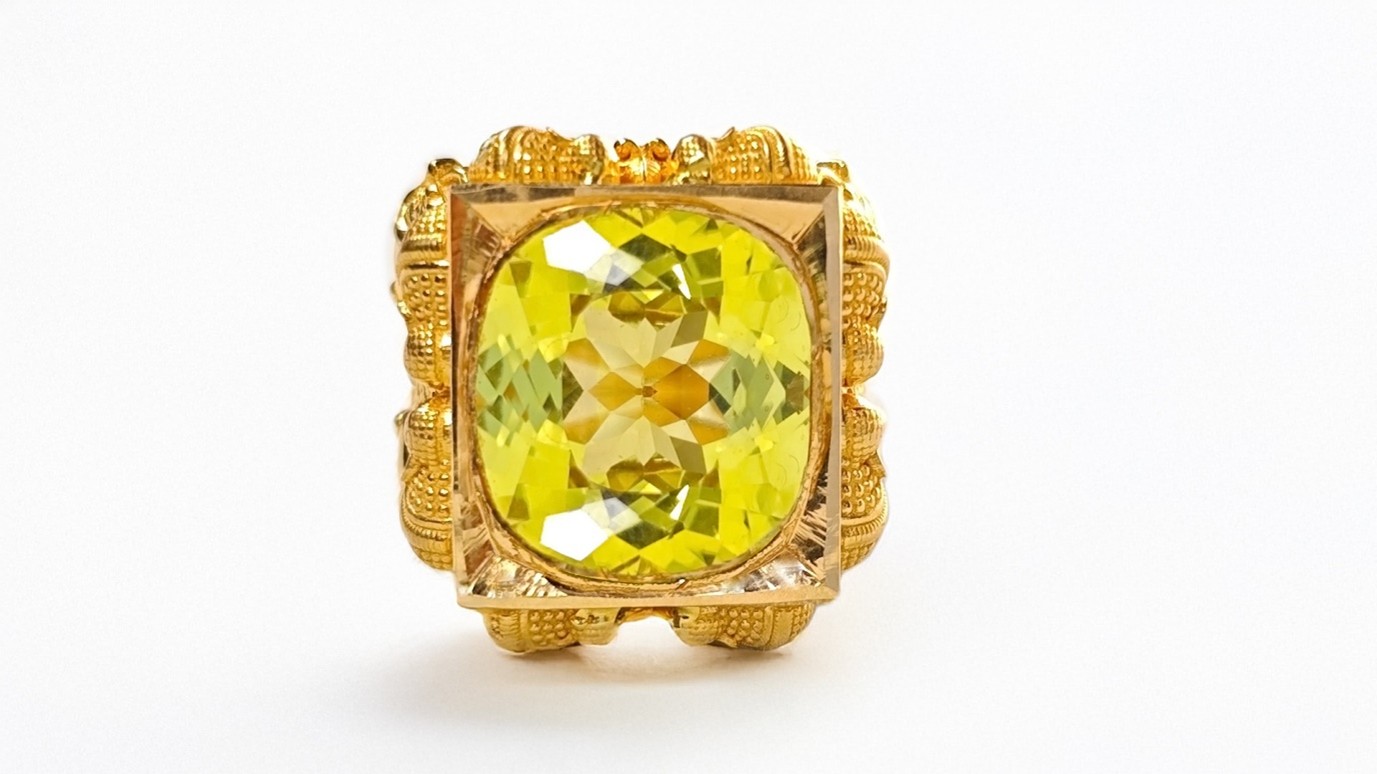 Rare
Mahat Ratnam (Gold Heavy Ring)
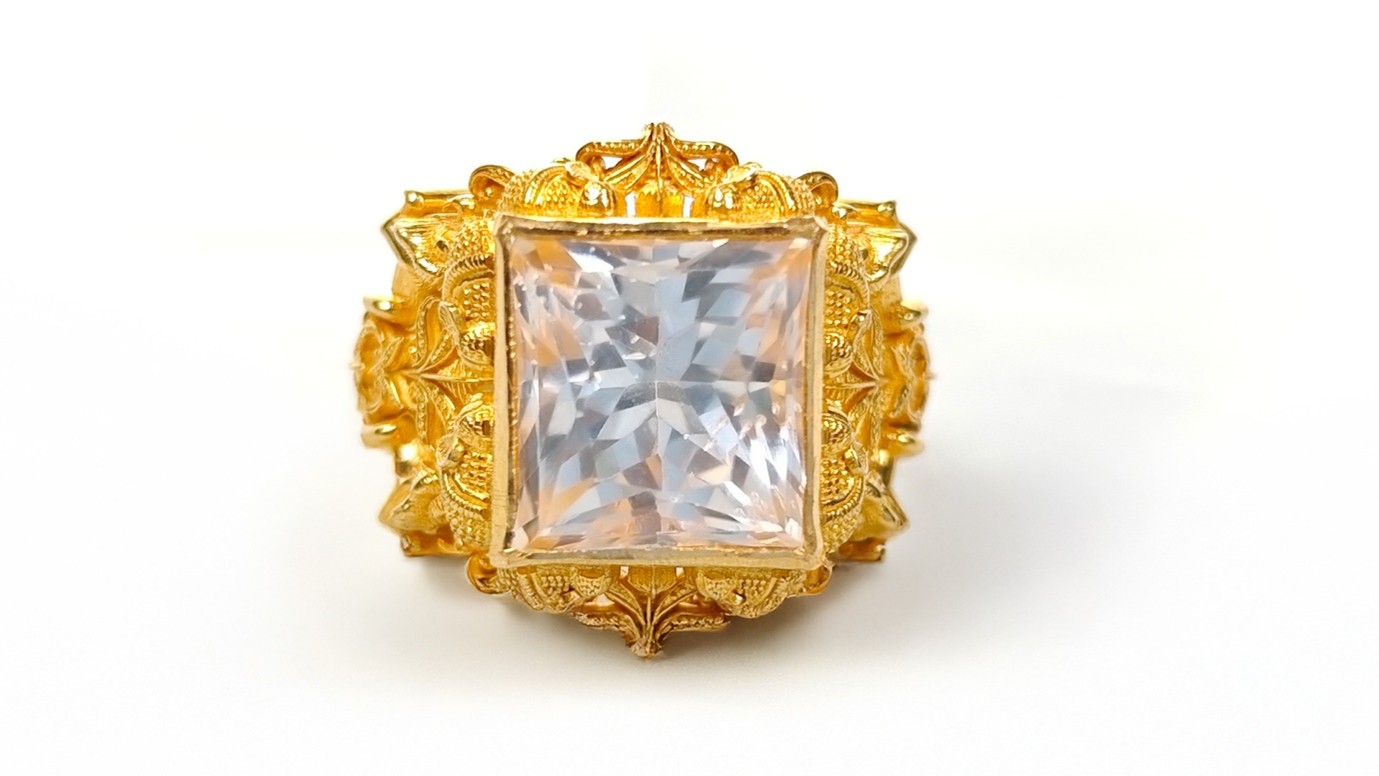
Sweetha Sukra Rathnam (Gold Heavy Ring)
Remedies & reports matched to your chart
We read your real Vedic birth chart, find your beneficial planets, then handpick ratnams, reports and guidance that strengthen them.
