


What Is Panchang? Complete Guide to Vedic Timekeeping
What Is Panchang? Tithi, Nakshatra, Yoga, Karana & Rahu Kaal Explained
Panchang is a traditional Hindu almanac and calendar system rooted in Vedic astrology that tracks the daily positions of celestial bodies—primarily the Sun and the Moon—to determine timekeeping, auspicious periods (Shubh Muhurat), and festival dates. Derived from the Sanskrit words Pancha (five) and Anga (limbs), the term translates to "five limbs."
Understanding what Panchang is requires exploring these five core structural elements: Vara (day of the week), Tithi (lunar day), Nakshatra (lunar constellation), Yoga (Sun-Moon angular relationship), and Karana (half of a Tithi). Together, these five Angas provide a framework for calculating favorable and unfavorable times for personal, spiritual, and social activities.
What Are the Five Panchang Elements?
The five elements of Panchang serve as the mathematical foundation for Vedic timekeeping. Every day in a Vedic Panchang is categorized by a specific combination of these five factors, calculated based on precise astronomical longitudes.
| Panchang Element | Astrological Basis | Represents | Primary Use |
| Vara | Solar day | Day of the week | General daily energy |
| Tithi | Sun-Moon angle ($12^\circ$ increments) | Lunar day | Religious rituals and fasting |
| Nakshatra | Moon's zodiac position ($13^\circ 20'$ arcs) | Lunar constellation | Personal temperament & Muhurat |
| Yoga | Combined solar/lunar longitudes | Angular relationship | Determining favorable/unfavorable time |
| Karana | Half of a Tithi ($6^\circ$ increments) | Half-lunar day | Selecting timing for specific tasks |
What Is Tithi in Panchang?
A Tithi represents the time taken by the longitudinal angle between the Sun and the Moon to increase by $12^\circ$. Unlike a standard solar day, which runs consistently over 24 hours from midnight to midnight (or sunrise to sunrise), a Tithi varies in duration—typically lasting between 19 and 26 hours—depending on the orbital speeds of the Earth and Moon.
Shukla Paksha
Shukla Paksha refers to the waxing phase of the Moon. It begins the day after Amavasya (New Moon) and culminates in Purnima (Full Moon). As lunar light increases daily, this fortnight is traditionally associated with expansion, growth, and positive energy for initiating new endeavors.
Krishna Paksha
Krishna Paksha refers to the waning phase of the Moon. It begins the day after Purnima and ends with Amavasya. As lunar light decreases, this fortnight is traditionally designated for introspective practices, spiritual discipline, and releasing old habits.
Important Tithis
-
Pratipada: The 1st Tithi of either Paksha, marking the start of a fortnight.
-
Panchami: The 5th Tithi, often dedicated to specific deities and rituals like Saraswati Puja.
-
Ekadashi: The 11th Tithi, widely observed across Hindu traditions for fasting and spiritual detox.
-
Trayodashi: The 13th Tithi, associated with Pradosh Vrat for Lord Shiva.
-
Chaturdashi: The 14th Tithi, preceding the culmination of the Paksha (e.g., Shivratri occurs on Krishna Paksha Chaturdashi).
-
Purnima: The 15th Tithi of Shukla Paksha, marking the Full Moon.
-
Amavasya: The final Tithi of Krishna Paksha, marking the New Moon.
What Is Nakshatra in Panchang?
A Nakshatra is one of 27 lunar mansions or constellations through which the Moon travels in its orbit around the Earth. The $360^\circ$ ecliptic is divided equally into 27 parts, giving each Nakshatra a span of $13^\circ 20'$.
How Nakshatra Is Determined
As the Moon moves across the sky, it passes through these 27 sectors. The specific constellation in which the Moon is located at any given moment defines the active daily Nakshatra.
Birth Nakshatra vs. Daily Nakshatra
-
Birth Nakshatra (Janma Nakshatra): The specific constellation occupied by the Moon at the precise minute of an individual's birth. It is used in natal astrology (Kundli) to map life patterns, emotional inclinations, and Dasha (planetary periods).
-
Daily Nakshatra: The current position of the Moon on any given day. This affects collective daily energies and is referenced during Muhurat selection to see how it aligns with an individual's birth chart.
What Is Yoga in Panchang?
In the context of a Panchang calendar, Yoga does not refer to physical postures or exercise. Instead, it refers to a mathematical calculation based on the sum of the longitudes of the Sun and the Moon.
How Panchang Yoga Is Calculated
The longitudes of the Sun and Moon are added together, and the total sum ($360^\circ$ circle) is divided into 27 equal parts of $13^\circ 20'$ each. Each division represents a distinct Yoga, such as Vishkambha, Preeti, Ayushman, or Vaidhriti.
Why Is Yoga Important?
Each of the 27 Yogas possesses a distinct energetic quality classified as either auspicious (Shubh), inauspicious (Ashubh), or neutral. Checking the active Yoga helps practitioners avoid beginning critical long-term ventures during inherently turbulent planetary combinations.
What Is Karana in Panchang?
A Karana is equivalent to half of a Tithi. Because a single Tithi spans a $12^\circ$ separation between the Sun and Moon, one Karana corresponds to a $6^\circ$ arc. Consequently, there are two Karanas in every Tithi—one for the first half and one for the second.
How Karana Is Calculated
There are 11 recognized Karanas in total, divided into two primary categories:
-
Movable (Repeating) Karanas: Seven Karanas (Bava, Balava, Kaulava, Taitila, Garaja, Vanija, and Vishti) rotate through the Tithis of a lunar month eight times.
-
Fixed Karanas: Four Karanas (Shakuni, Chatushpada, Naga, and Kintughna) occur only once per lunar month, specifically during the end of Krishna Paksha and the beginning of Shukla Paksha.
Use in Muhurat
The active Karana provides granular insight for micro-timing daily decisions. For example, Vishti Karana (also known as Bhadra) is traditionally flagged as unfavorable for initiating new worldly projects, while Karanas like Bava or Taitila are generally considered favorable for constructive tasks.
What Is Vara in Panchang?
Vara refers to the day of the week, calculated from one local sunrise to the next local sunrise (unlike the standard midnight-to-midnight civil day). Each of the seven Varas is ruled by a specific primary planetary entity:
-
Ravi Vara (Sunday): Ruled by the Sun (Surya); associated with authority, health, and vitality.
-
Soma Vara (Monday): Ruled by the Moon (Chandra); associated with emotions, mind, and fluid actions.
-
Mangala Vara (Tuesday): Ruled by Mars (Mangal); associated with energy, action, and vigor.
-
Budha Vara (Wednesday): Ruled by Mercury (Budh); associated with intellect, commerce, and communication.
-
Guru Vara (Thursday): Ruled by Jupiter (Guru); associated with wisdom, learning, and auspicious rituals.
-
Shukra Vara (Friday): Ruled by Venus (Shukra); associated with art, relationships, and finance.
-
Shani Vara (Saturday): Ruled by Saturn (Shani); associated with discipline, hard work, and endurance.
What Is Rahu Kaal?
Rahu Kaal (or Rahu Kalam) is a specific period of approximately 90 minutes each day that is governed by Rahu, the north node of the Moon. In traditional Hindu astrology, Rahu Kaal is generally considered an unfavorable period for beginning major new endeavors, signing contracts, or performing sacred ceremonies.
How Is Rahu Kaal Calculated?
The total daylight duration between local sunrise and local sunset is divided into eight equal parts. Each weekday assigns a specific segment of these eight parts to Rahu:
-
Monday: 2nd period
-
Saturday: 3rd period
-
Friday: 4th period
-
Wednesday: 5th period
-
Thursday: 6th period
-
Tuesday: 7th period
-
Sunday: 8th period
Is Rahu Kaal the Same Every Day?
No. Because sunrise and sunset times shift daily based on seasonal changes and geographic location, the precise start and end times of Rahu Kaal vary every single day and differ from city to city.
What Is the Difference Between Panchang and Kundli?
While both tools are central to Vedic astrology, they serve distinct practical functions:
| Feature | Panchang | Kundli |
| Primary Focus | Daily timekeeping and macro-cosmic energies | Individual life map and personal destiny |
| Calculation Basis | Real-time planetary positions for a location | Fixed planetary positions at exact birth moment |
| Time Dynamic | Changes constantly throughout the day | Remains static as a birth baseline |
| Primary Purpose | Selecting auspicious timings (Muhurat) & festival dates | Personal horoscope, career, health, & compatibility analysis |
How to Read a Daily Panchang
Reading a daily Panchang involves systematic evaluation of astronomical indicators to determine the quality of time:
-
Check Sunrise and Sunset: Determine the operational window of the astrological day for your exact locality.
-
Identify the Vara: Note the day of the week and its ruling planet.
-
Review the Tithi: Check the active Tithi, its end time, and whether it falls in Shukla or Krishna Paksha.
-
Determine the Nakshatra: Note the current constellation and its exact duration.
-
Check the Yoga & Karana: Identify the ruling combination to assess underlying qualities.
-
Locate Inauspicious Windows: Mark periods like Rahu Kaal, Yamaganda, or Gulika Kaal to avoid starting important activities.
-
Identify Shubh Muhurat: Check for optimal windows like Abhijit Muhurat or Brahma Muhurta.
What Is Shubh Muhurat in Panchang?
A Shubh Muhurat is an auspicious time window calculated by synthesizing the five Angas of the Panchang alongside planetary transits. It is used to align human initiatives—such as weddings, Griha Pravesh (housewarming), business launches, and naming ceremonies—with favorable cosmic energies.
Key Daily Muhurat Windows
-
Brahma Muhurta: Occurs approximately 1 hour and 36 minutes before sunrise (spanning 48 minutes). It is highly regarded for meditation, spiritual practice, and study.
-
Abhijit Muhurat: A daily mid-day window occurring around astrological noon (lasting approximately 48 minutes). It is considered naturally auspicious for initiating most routine or positive tasks, except on Wednesdays.
Why Is Panchang Important?
The Hindu calendar Panchang acts as an operational guide for daily living, religious observance, and event planning:
-
Festival Tracking: Determines exact dates for events like Diwali, Navratri, Maha Shivratri, and Ekadashi based on Tithi precision rather than solar dates.
-
Ritual Execution: Guides religious rituals, fasts (Vrats), and ancestral rites (Shraddha) to align with proper lunar phases.
-
Event Planning: Helps individuals select optimal dates for major life events, such as marriages, contract signings, and travel.
How Is Panchang Calculated?
Panchang calculation relies on complex mathematical astronomy tracking the relative positions of the Sun ($360* ecliptic) and the Moon, adjusted for geographical coordinates.
Why Location and Time Zone Matter
Because the five elements of Panchang rely on local sunrise times and topocentric planetary coordinates, a Panchang calculated for New Delhi will not display identical timing markers to one calculated for London or New York. Factors impacting local calculations include:
-
Exact latitude and longitude of the observer
-
Seasonal variations in sunrise and sunset times
-
Regional time zones and Daylight Saving Time adjustments
Written by
Ramana Lal
Panchang expert · Astrotalks Adrustar

Frequently Asked Questions
Related Articles

Find Nakshatra by Date of Birth – Birth Star & Janma Nakshatra
Read more
Free Kundli Online: Complete Vedic Birth Chart Guide
Read more
Year 2026 Mid-Year Astrology Check-In – How to Review Your Predictions
Read more
How to Use Your Mahadasha to Navigate August 2026 Eclipse Season
Read more
August 28 Triple Event Puja – Raksha Bandhan, Varalakshmi & Lunar Eclipse
Read moreFeatured Videos
 —
—8 రోజులో పెళ్లి, 3 నెలల్లో కోట్ల సంపాదన, 100 కోట్ల దారి అద్బుతం
4 views
 —
—అష్టైశ్వర్యాలు రక్షణ తంత్రం 💰 | Adrusta Ratnam
16 views
 —
—10 లక్షల నుంచి కోట్ల సంపాదన! 😱@adrustaratnam #successstory
10 views
 —
—🙏 చివరి ప్రయత్నంగా వచ్చాం... 18 ఏళ్ల కష్టాలు ముగిశాయి! @adrustaratnam #successstory
16 views
 —
—😭 "చనిపోదాం" అనుకున్నాం... కానీ ఒక వీడియో మా జీవితాన్ని కాపాడింది! @adrustaratnam
18 views
 —
—గురుజి Exclusive Interview on SUMAN TV | What Secrets Will Be REVEALED?
7 views
 —
—అప్పులు అన్ని తీరిపోయాయి.. అంతా అదృష్ట రత్నం వల్లనే |నరకం నుండి బయటపడ్డ
6 views
 —
—డాక్టర్ గార్కి అదృష్ట రత్నతో. అష్ట ఐశ్వర్యాలు ,ధనం సక్సెస్
7 views
 —
—ADRUSTA RATNAM తో 100 కోట్లకు మార్గం, 4 కోట్ల ల్యాండ్ డీలింగ్, ఆరోగ్యం మంచిగా అయింది
3 views
 —
—అదృష్ట రత్నం ధారణతో ఉద్యోగం, కుటుంబంలో శుభఫలితాలు!
2 views
Consult Astrologers

Swami Narayana Das

Pandit Ramesh Sharma

Pandit Vijay Shastri

Pandit Deepak Tripathi

Learn Astrology
 Beginner
Foundations of Vedic Astrology
Start your Jyotish journey — planets, signs, houses, and how a birth chart is built from the sky at your moment of birth.
 Intermediate
Reading Your Birth Chart
Go from chart structure to interpretation — ascendant, planetary placements, aspects, and the art of synthesis.
 Beginner
Numerology Essentials
Decode the hidden language of numbers — life path, destiny, and name numbers and what they reveal about you.
Astrology Reports

Yearly Horoscope 2026 Report
A complete 2026 forecast across career, money, love, health, and spirituality.

Fortune & Wealth Report
Understand your financial destiny through the wealth houses of your chart.

Baby Astrology Report
A loving first map of your child's chart — nature, talents, and auspicious names.

Varshphal — Annual Solar Return Report
Your personalised year-ahead forecast built on the Tajika solar-return chart.

Name Correction Report
Align the numerology and phonetics of your name with your birth chart.

Sade Sati Report
Navigate Saturn's seven-and-a-half-year transit with clarity and remedies.

Rahu Ketu Report
Decode the karmic axis of your chart and the path of your soul's growth.

Love & Relationship Report
Understand your heart's pattern, compatibility, and the timing of love.

Career & Profession Report
Find your true vocation through the tenth house and the strengths of your chart.
Adrusta Ratnam Remedies

Bruhat Yoga Swarna Ratnam & Lakshmi Ratnam

BruhatYoga Swarna Ratnam

Sweetha Sukra Ratnam

Lakshmi Ratnam

Mahat Ratnam
 Rare
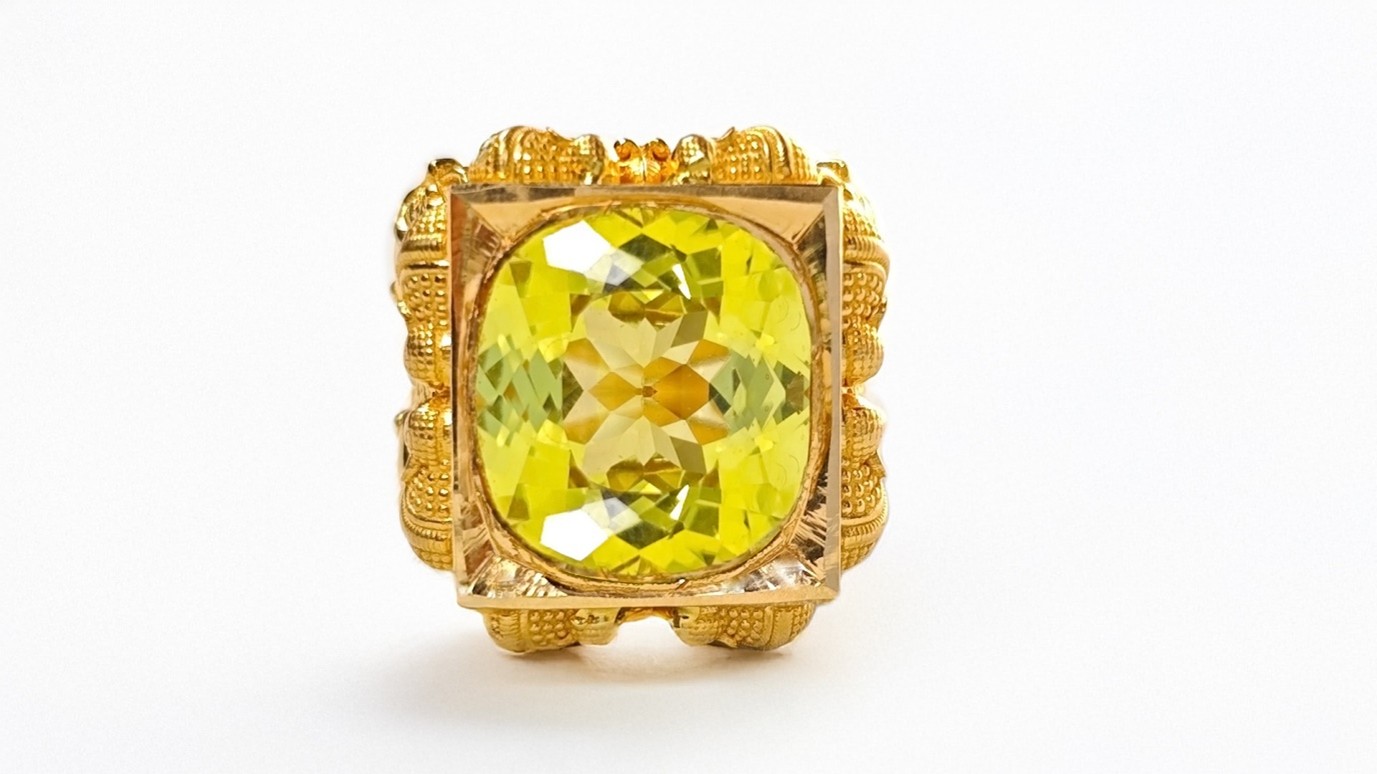
RareMahat Ratnam (Gold Heavy Ring)
 Luxury
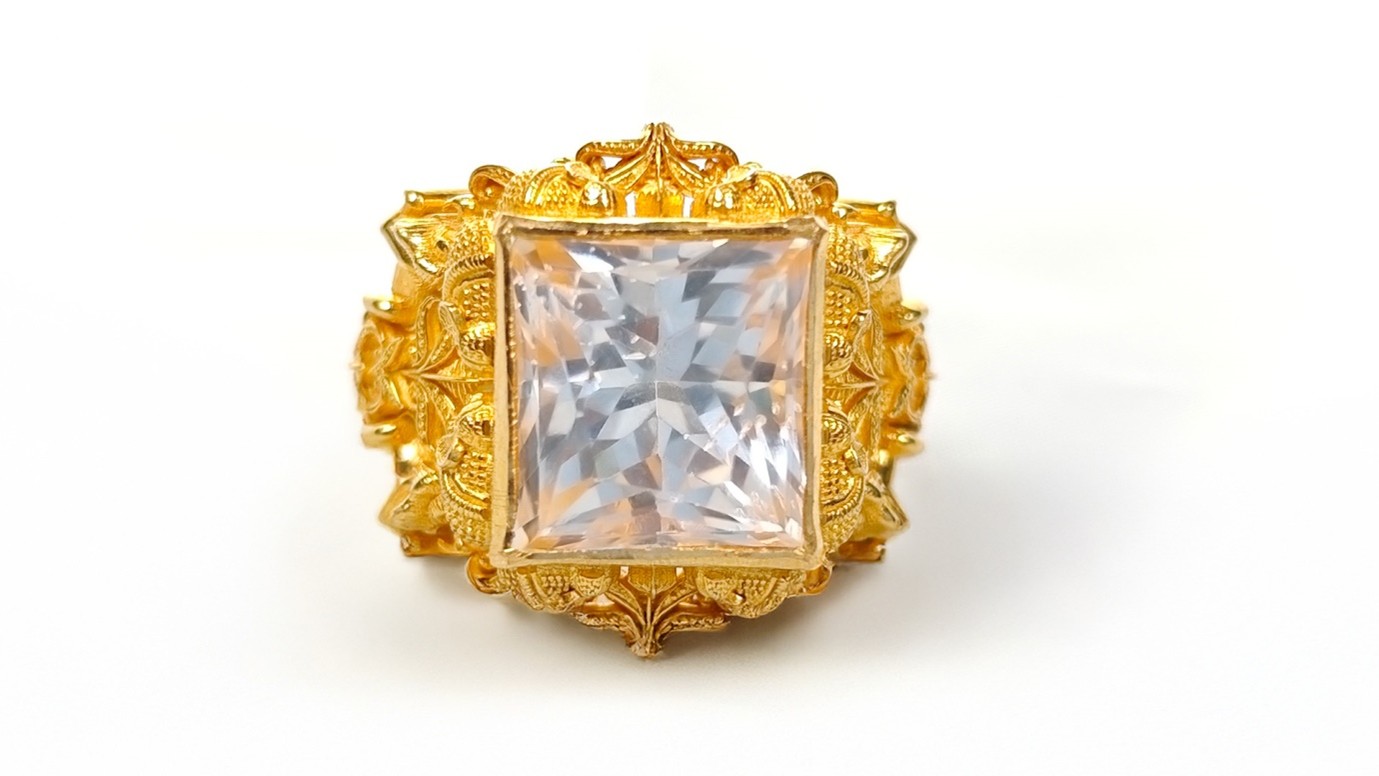
Sweetha Sukra Rathnam (Gold Heavy Ring)
Remedies & reports matched to your chart
We read your real Vedic birth chart, find your beneficial planets, then handpick ratnams, reports and guidance that strengthen them.
